Traveling with a Notebook: Why I Document Every Journey
There is a certain stillness that settles in when a notebook opens on a café table or on the edge of a quiet pier. The act of writing during travel is not merely about recording facts—it is a process of slowing down, of translating fleeting impressions into words. Over the years, this habit has become a companion on every trip, a way to hold onto experiences that might otherwise dissolve into the blur of movement. This article explores what keeps the practice meaningful and how it shapes the way journeys are perceived long after they end.
Keeping a travel journal is a personal ritual that varies from one person to the next. Some fill pages with detailed accounts of each day, while others sketch rough maps or jot down overheard conversations. Regardless of the form, the underlying intention remains similar: to create a space where the experience can be revisited. At Wander Compass, we often hear from travelers who describe the journal as a kind of anchor—a tool that helps them stay present and engaged with their surroundings. Rather than promising any particular outcome, the practice offers a framework for observation and reflection.
The purpose of this article is not to prescribe a specific method, but to consider how writing during travel can influence memory, creativity, and the sense of connection to a place. These effects are highly contextual and depend on many factors, including individual habits, the nature of the journey, and the willingness to engage with the process. What follows is an exploration of these dimensions, grounded in observation rather than prescription.
How Writing Shapes the Way Memories Are Formed
The human memory is not a static recording device; it is a dynamic system that reconstructs events each time they are recalled. Writing during a journey provides an external scaffold for this process. When a traveler takes a few minutes each day to describe what they saw, heard, or felt, they are actively selecting and organizing details. This act of selection can influence which aspects of the experience become more prominent in memory. For example, noting the texture of a market stall’s wooden counter or the specific rhythm of a street musician’s song may later trigger a richer recollection than a simple photograph could.
Cognitive research suggests that the encoding of episodic memories is strengthened when attention is focused and when information is elaborated upon. A notebook becomes a medium for elaboration: describing a scene in words requires making connections between sensory input, emotions, and context. The result is not a guarantee of perfect recall, but a greater likelihood that certain moments will remain vivid. Travelers who journal often report that they remember more details about their trips—not because the writing itself stores the memory, but because the process of writing deepens the initial engagement.
It is important to note that memory is also influenced by rest, reflection, and the passage of time. Writing does not lock memory in place; instead, it creates a point of reference that can be revisited and reinterpreted. This is why the journal is not a record of objective truth, but a personal narrative that evolves with each reading. The act of writing does not ensure that every detail will be preserved, but it offers a flexible framework for reconstructing experiences later on.
Cultivating a Creative Perspective Through Observation
Travel exposes the mind to novel environments, unfamiliar routines, and unexpected juxtapositions. These conditions are fertile ground for creative thinking, but they require a certain readiness to notice. A notebook can serve as a tool for cultivating that readiness. By setting aside time to write, a traveler invites themselves to look more carefully at the world around them. This is not about forcing inspiration, but about creating the conditions in which small observations can grow into larger insights.
Many creative professionals use journals to capture ideas, sketches, or fragments of thought. In the context of travel, the notebook becomes a place to experiment with language, to describe something in an unexpected way, or to combine observations from different moments. For instance, a description of morning light filtering through a train window might later connect with a conversation overheard at a bakery, forming a narrative thread that was not immediately obvious. This kind of associative thinking can be nurtured by the habit of writing regularly, though it cannot be forced or predicted.
There is also a sense in which the journal becomes a playground for writing itself. Without the pressure of an audience, a traveler can try out different styles, use metaphors freely, or record impressions that feel incomplete. This low-stakes practice can enhance a person’s comfort with expressing ideas, which in turn may influence how they approach other creative endeavors. The connection between journaling and creativity is not a direct cause-and-effect relationship, but rather a gradual cultivation of attention and expression. Over time, the notebook may reveal patterns in what catches the writer’s eye, offering material for projects that extend far beyond the journey.
Deepening the Sense of Connection to Places Visited
One of the most compelling reasons to document a journey is the way it can deepen the relationship between the traveler and the place. Writing requires more than passive observation; it asks the writer to engage with the environment intellectually and emotionally. Describing a neighborhood’s architecture, for example, might involve noticing materials, colors, and layout, while also reflecting on how the space feels at different times of day. This layered attention can lead to a more nuanced understanding of a location than simply passing through.
For many travelers, the notebook becomes a space for processing cultural differences and personal reactions. Recording a moment of confusion or surprise, and then writing about what might have caused it, can help the traveler move from a surface-level impression to a more considered perspective. This is not about reaching a definitive understanding, but about opening a dialogue with the place. The journal captures the questions that arise along the way—questions that might be revisited later or discussed with others.
The connection to a place also deepens when the journal is used to document interactions with local people, food, or traditions. These entries often become the most cherished, as they hold the texture of human experience. A brief conversation with a market vendor, the taste of a fruit never encountered before, or the sound of a language spoken at a nearby table—all these details, when written down, weave the traveler into the fabric of the place. The result is not a claim of belonging, but a felt sense of having participated in something real and fleeting.
Practical Approaches to Keeping a Travel Journal
There is no single correct method for maintaining a travel journal. Some people prefer a blank notebook with unlined pages, while others choose a structured format with prompts. The choice of tools often depends on personal comfort and the nature of the trip. A small pocket notebook may be ideal for quick notes during a busy day, while a larger journal might allow for more extended reflection in the evening. The important factor is consistency—finding a rhythm that fits the travel style.
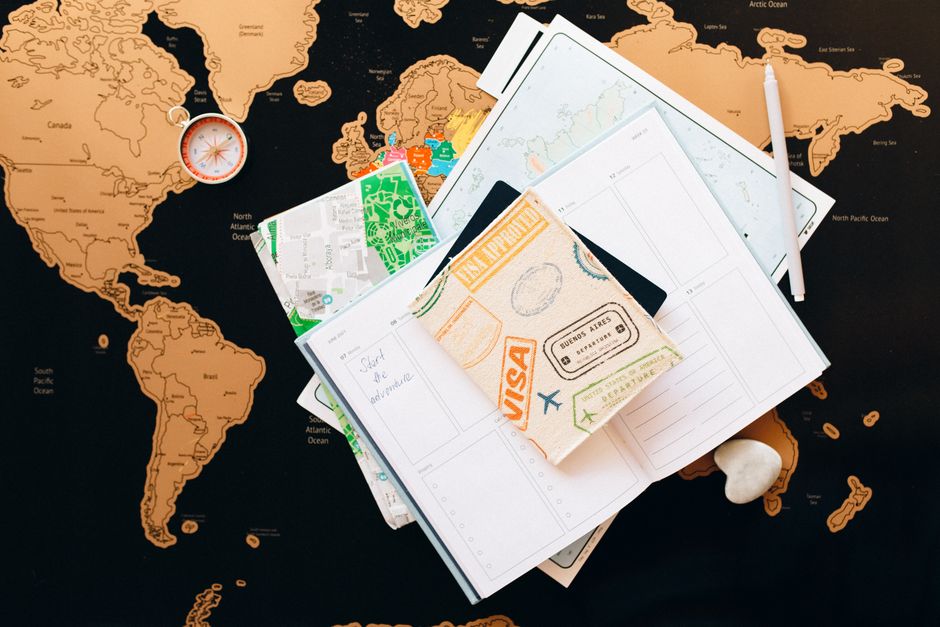
One common approach is to write at the end of each day, focusing on a few key moments rather than trying to recount everything. This practice helps avoid the fatigue of exhaustive recounting and leaves room for the most meaningful impressions to surface. Another method is to jot down observations throughout the day, perhaps in a bullet-point style, and then expand on them later. This dual approach allows for both immediacy and reflection. Many travelers also incorporate small artifacts—such as ticket stubs, pressed flowers, or receipts—into their notebooks, adding a tactile dimension to the written word.
It can be helpful to vary the type of content within the journal. Some pages might be purely descriptive, others may include questions or thoughts about a place’s history, and still others could contain quick sketches or diagrams. This variety keeps the process engaging and accommodates different moods and energy levels. The key is to treat the notebook as a flexible space rather than a formal record. For those who are new to travel journaling, starting with short, regular entries can make the habit more sustainable. Over time, the practice tends to develop its own shape, guided by the writer’s changing interests.
The Personal Nature of Documentation
Every travel journal is a unique artifact. Two people visiting the same city will fill their notebooks with entirely different observations, shaped by their backgrounds, expectations, and attention. This individuality is part of the value. A journal does not aim to be objective or comprehensive; it reflects the perspective of a single observer at a particular moment in time. As such, it offers a kind of autobiography of the journey—a record not just of places, but of the person who traveled through them.
The act of looking back at old journals can also be revealing. Years after a trip, reading those pages may evoke feelings that were forgotten or shed new light on experiences that seemed minor at the time. The notebook becomes a dialogue between past and present selves, and the notes written in haste or wonder take on a different weight. This retrospective quality is one of the quiet rewards of the practice. It does not offer any guarantee of nostalgia, but it does open a door to revisit and reinterpret the journey in light of later experiences.
Ultimately, the decision to document a journey is a personal one. For some travelers, the notebook is an indispensable companion; for others, the camera or the memory alone suffices. At Wander Compass, we have observed that those who choose to write often describe a sense of coherence—a feeling that the journey was not just seen, but also understood. The notebook does not capture everything, but it holds enough to make the act of traveling feel intentional and reflective. In that sense, documenting every journey is not about collecting facts, but about weaving a story that continues to unfold.